
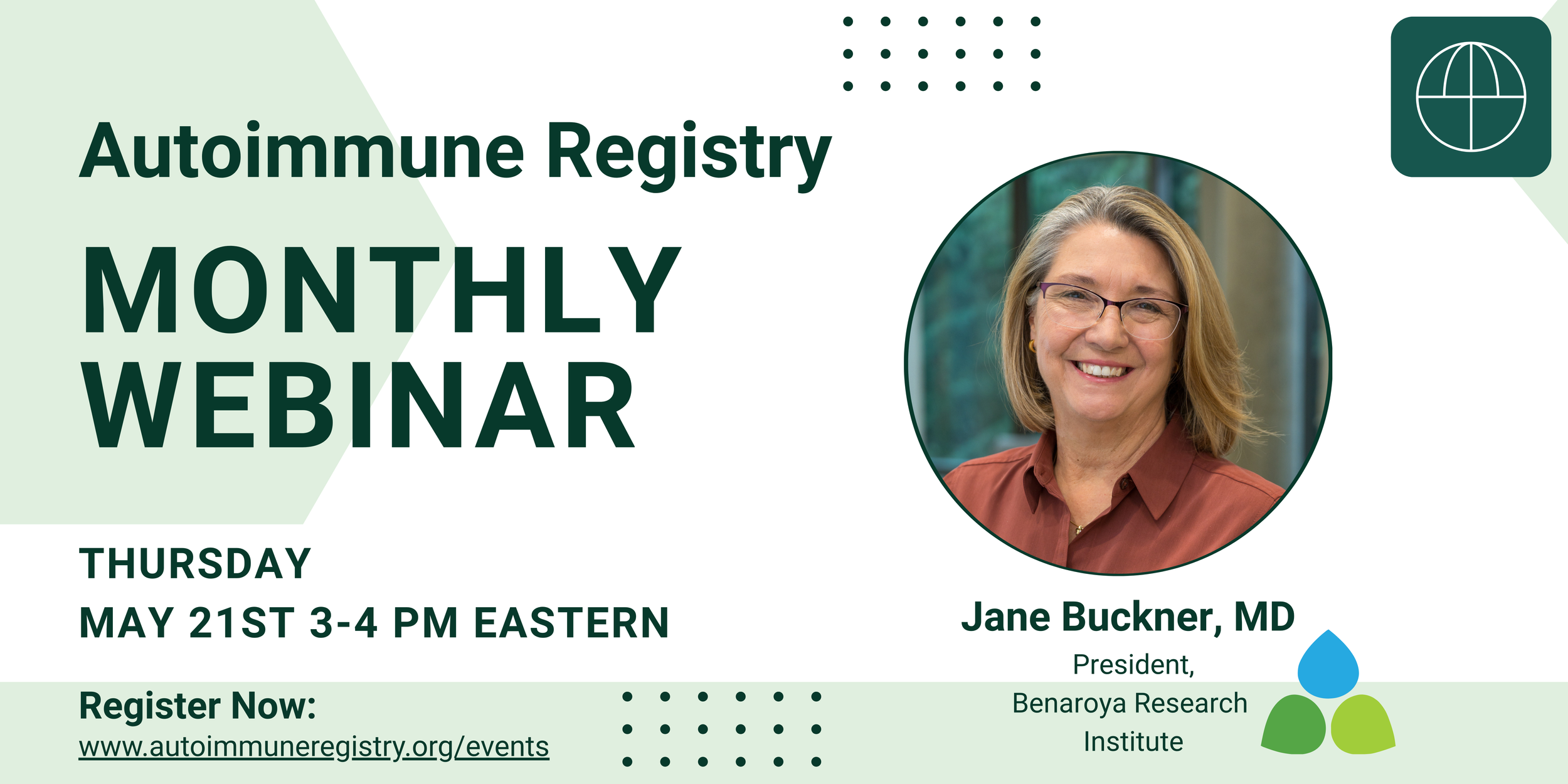
The Autoimmune Registry hosts a monthly webinar series bringing together leaders across patient advocacy communities. This month, we are honored to welcome Jane Buckner, MD, President of the Benaroya Research Institute, who will share her insights on the collaborative research efforts driving toward prevention of autoimmune disease.
Details: Thursday, May 21, 2026, from 3:00 to 4:00 PM ET
Agenda:
3:00 - 3:05 PM: Convene
3:05 - 3:10 PM: Introductions
3:10 - 3:40 PM: Working Together: How Do We Get to Prevention of Autoimmunity?
3:40 - 3:00 PM: Q&A
About Dr. Jane Buckner
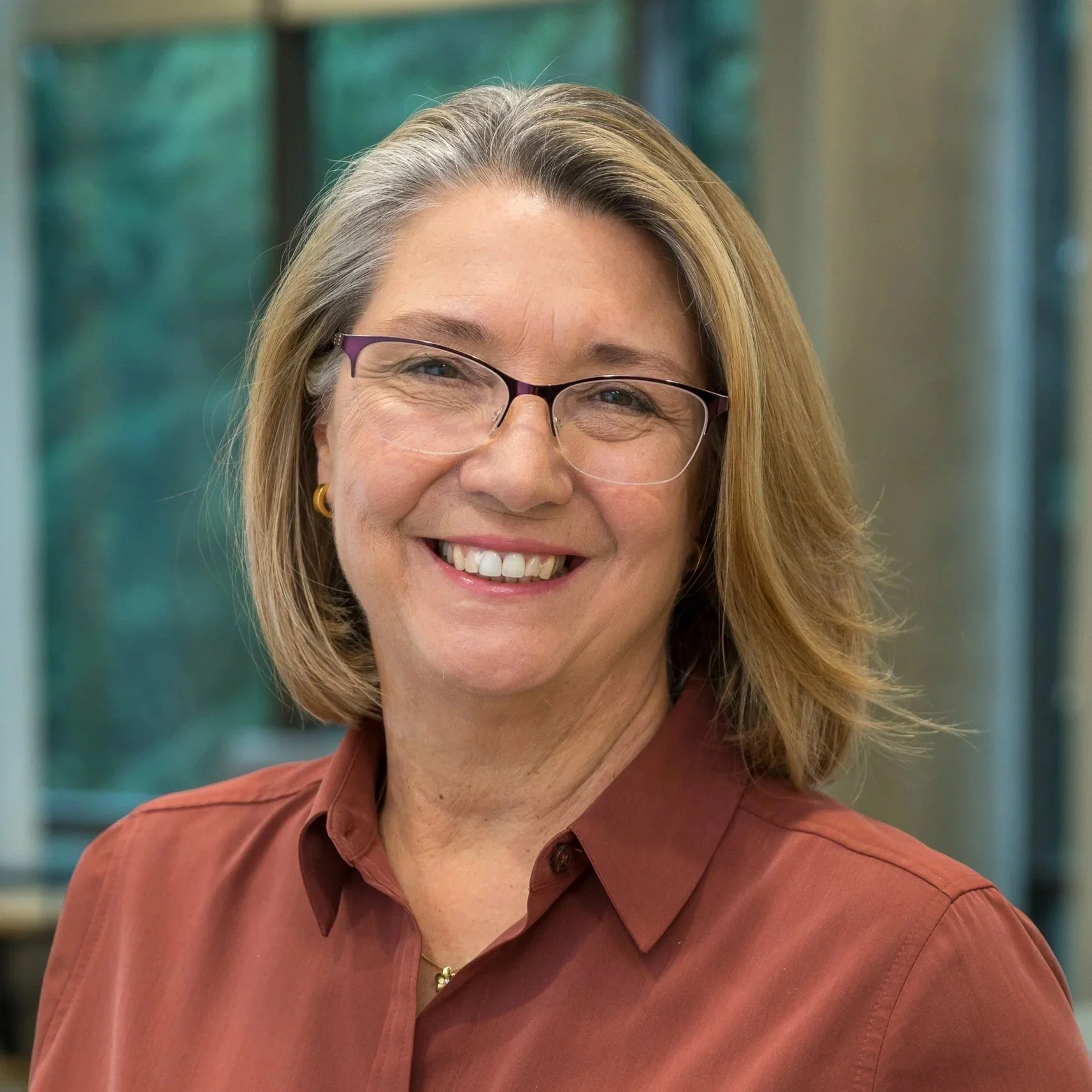
Jane Buckner, MD
Benaroya Research Institue,
President
Jane Buckner, MD is the President of the Benaroya Research Institute and an affiliate Professor at the University of Washington, where she practices as a rheumatologist.
Dr. Buckner’s research in translational immunology integrates genetics, immunology, and clinical medicine to advance understanding of autoimmune disease causes. At BRI, she led the development of the translational immunology research program and established a biorepository now holding more than 350,000 samples from 15,000 participants.
Dr. Buckner has made significant contributions to understanding T cell dysregulation in type 1 diabetes and rheumatoid arthritis and has been a pioneer in antigen-specific Treg therapies. She leads the Coordinating Center of the NIH-funded Immune Tolerance Network and serves as a scientific advisor for Type 1 Diabetes TrialNet. In 2024, she received the American Association of Immunologists Steinman Award for Human Immunology Research.
About BRI
The Benaroya Research Institute is a nonprofit biomedical research institute affiliated with the University of Washington, focused on understanding and ultimately curing immune-mediated diseases.
Through its translational immunology research program and extensive biorepository, BRI connects laboratory discoveries to clinical medicine, advancing treatments for conditions like type 1 diabetes, rheumatoid arthritis, and other autoimmune diseases.
If you work in patient advocacy, clinical research, healthcare policy, or live with chronic illness, this conversation will provide meaningful insight into how patient-centered systems are built and sustained.